THIS WEBSITE INCLUDES GENERAL INFORMATION & THE OPINIONS OF CHRISTOPHER S. MULVANEY. IT IS INTENDED TO STIMULATE A BASIS FOR QUESTIONS RELATED TO YOUR PARTICULAR FACTUAL CIRCUMSTANCES — BEFORE YOU ACT. THIS WEBSITE DOES NOT CONSTITUTE LEGAL ADVICE. IF YOU WANT LEGAL ADVICE, PLEASE MAKE A ZOOM APPOINTMENT TO SPEAK WITH ME.
CONTACT CHRISTOPHER S. MULVANEY FORM
DISCLAIMER:
The use of email or this form for communication with MULVANEY LAW OFFICE, PLLC does not establish an Attorney-Client Relationship. If you don’t think I have responded, please check your spam folder. Time-sensitive information should not be sent through this Form or through email. Sensitive information can be uploaded to an encrypted Dropbox folder in your client file. Google Review LinkYelp Review Link
Gonzaga University School of Law – Spokane, Washington – Class of 2002 – Cum Laude The Latin phrase “Deo patriae, scientiis, artibus” translates to “For God and country through sciences and arts”. The initials A.M.D.G. on the seal of Gonzaga Law School stand for Ad Majorem Dei Gloriam, which is Latin for “For the Greater Glory of God” the Motto of the Society of Jesus (Jesuits): a Catholic religious order founded by St. Ignatius of Loyola.
_________________________
“Justice denied anywhere
diminishes justice everywhere.” –Martin Luther King, Jr.
(1) Automatic Splitting of 401(k) Accounts Between Spouses
If you are married, every 401 (k) (or similar) contribution by an employee including employer matching contributions should be required to be automatically split into two equal accounts, one for each spouse. That would be completely consistent with community property. It would avoid the dreaded QDRO (Qualified Domestic Relations Order), which is a Divorce Court Order that splits retirement accounts of married people without having negative tax implications. It would reduce anxiety and stabilize the economy because all retirement accounts would contain only each individual’s share rather than containing community property as our current system does.
Currently I advise clients to track the 401(k) contributions of each spouse during marriage and to increase the net worth of the spouse with much less in contributions. This attempt at some degree of equalization would be totally unnecessary. Protecting each spouse’s retirement should be effortless. Nobody should have to go to Court to protect their retirement income.
(2) Automatic Naming of Surviving Spouse as Primary 401(k) Beneficiary and all children equally as Contingent Beneficiaries
Currently, upon marriage no one other than your spouse can be named as 100% Primary Beneficiary without their written consent. If the beneficiary form is blank, then the surviving spouse has to do an unnecessary Probate to get their deceased spouse’s retirement account funds. The surviving spouse’s name and address must appear on a death certificate. Every surviving spouse should automatically be Primary Beneficiary regardless of when an online form is filled out and regardless of whether any one other than the surviving spouse is named as beneficiary. This would prevent grieving surviving spouse’s from having to waste time, money, and effort at a time when it is especially burdensome for them to have to do so.
Currently, if you don’t have a signed Spousal Consent form in the possession of the account custodian, and your spouse dies naming their adult child from a previous marriage as Primary Beneficiary for example, then the surviving spouse gets the Spousal Consent form in the mail. If the surviving spouse signs, then the adult child gets the money. If not, then the surviving spouse and adult child can end up in litigation sorting out the community property and separate property shares of the account. If no community property was ever deposited into a 401(k) account, then disputes are reduced.
If the surviving spouse is automatically the beneficiary of the deceased spouse’s 401(k) into which was deposited the same amount as was deposited into the surviving spouse’s account then community property rights are fully protected without court intervention. If the parties had a 401 (k) when they were single, that would be a separate account in which they could name whomever they wanted as beneficiary including their adult children without any spousal consent required. 401 (k) accounts would be divided into married and single. Married accounts automatically go to the surviving spouse; single accounts automatically go equally to children unless changed by the account owner.
If children were automatically contingent beneficiaries then you would have to intentionally disinherit your child if you wished to do so. Currently, you can inadvertently disinherit an a child and there is nothing they can do about it. Courts cannot change beneficiaries of deceased people. Judges tell parties they have to talk to the Legislature to address the unfair disinheritance. Apparently, they have not done so in large enough numbers to a affect a change.
I encourage adult children to share with their inadvertently disinherited sibling. They are not required to do so and cannot be ordered by a Court to share. Most people do what I suggest, but I did have one client who said, “My siblings already hate me. I don’t care. I am keeping the money.” And he did.
(3) Allowing a new Account Number to be created after marriage for 401(k) accounts.
If everything in your 401(k) on the date of marriage had a separate account number and you could name anyone you wanted as beneficiary, and everything you added after marriage had another account number and your spouse was the automatic beneficiary of that account, it would cut down on disputes. There would be no reason to pay lawyers hundreds of dollars per hour to sort out what is community property and what is separate property. Calculating the growth of the separate and community property portions of the account is a story problem that divorcing people should not have to pay to solve.
(4) Requiring Full Legal Names on Title to Real Estate.
When there are variations in names an (AKA ______) is needed to clarify Title. If a variation is missed it can interfere with a conveyance. If there is more than one AKA it gets ridiculous. The full legal names of the responsible taxpayers should be required on all parcels of real property. It is bad enough that FKA and NKA have to be used for Court Ordered name changes without adding to the problems by needlessly using multiple variations of names to hold title. Improvements Needed in Estate Law:
(5) Digital Assets and Cryptocurrency Transfer & Management:
Estate planning needs to adapt to include provisions for managing and transferring cryptocurrencies and other digital assets. Automated Asset Transfers: Smart contracts, operating on blockchain systems, can be developed to automatically transfer crypto assets upon specific conditions, such as the presentation of a death certificate, reducing delays and potential disputes.
(6) Easy, Inexpensive Financial Guardianship for vulnerable people.
Undue Influence and outright theft are common in the later years of life. If the State had it’s own bank and every citizen had an account and all state and government business was conducted through the state bank, then the state bank could have a guardianship division to manage the finances of people on social security or who are receiving government pensions. The state bank could also create a collection proof account type for people whose income is retirement, or disability or unemployment. Only funds from exempt sources could be deposited into the account. Such accounts would be safe from attachment. Specialized accounting software could be created to monitor accounts of vulnerable people to see that they are not being taken advantage of or stolen from. The state bank’s mission goes beyond profit, so such a bank would operate differently than a purely profit seeking bank.
(7) Creation of a Wealth Tax and the elimination of all Estate & Gift Taxes.
A national tax on wealth should be created so that it is irrelevant whether assets are given during life or after death because any and every person who holds the wealth is taxed on it. We already have the ownership records of every stock and bond in the U.S. as well as the cost basis and gain of every stock in the U.S. Computing power should be sufficient such that a return is created and filed for each person with publicly available information. Then people could provide documentation as to why anything should be changed before the taxpayer agrees with the return. If the taxpayer does nothing, then they would not receive a refund, but their would be an automatic payment on arrears and withholding adjustment if tax was owed for the next year. That way taxpayers wouldn’t get years behind and have huge tax bills. The tax system should be automatic, simple, and fair. It is none of those things now. There should be software on the IRS website that anyone can use to see what information the IRS has and to upload corrections to that information to get it to be as accurate as possible at all times. Tax refunds would all be made into the State Bank accounts that every single person would have. Universal basic income would be easy to implement because there would be a direct conduit always open into which money could be sent. The state bank accounts could not be closed without a death certificate.
(8) Elimination of the Electoral College.
The Electoral College is a shameful vestige of slavery that should be eliminated immediately. It allowed White Supremacist Donald Trump to be elected to his first term (45).
(9) Voting Rights for D.C Citizens
No citizen should be denied the right to vote.
(10) National Vote by Mail in Every National and State Election
We have a USPS that is mandated to serve every address in the Country. We should use it to make sure that ever voter at every address has the right to vote and can exercise it easily without intimidation. If every election in every state as well as every national election had thousands, tens of thousands, hundreds of thousands, millions or tens of millions of ballots being delivered by the USPS it would help with the solvency of the Post Office. Eliminating the Franking Privilege would also help. Someone should pay for everything sent through the mail.
(11) Protect the Environment from Pollution and Climate Change.
Pollution of air, water and soil, rising temperatures, rising sea levels, increased forest fires, floods, hurricanes, and reduction of arable land are all planetary issues that we all need to address. The displacement of people in low lying areas and in areas where agriculture can no longer be practiced is an issue for everyone in the world. Human beings are distributed throughout the world including many marginal areas where human beings should not have built due to the risk of fire, flood, storm damage, or lack of sufficient fertile soil. Human beings are in extreme environments involving heat and cold. People are going to move to more temperate climates if they can’t live where they are putting pressure on everyone.
One issue is population growth occurring fastest at the lower end of the spectrum of income and resources. For example, so long as Mexico is under the influence of Catholic ideology regarding not using birth control, Mexico will continue to export droves of migrant low wage workers who can’t earn a living in Mexico. Birth Control needs to be free and encouraged to the point of providing financial incentives at the lower economic levels, the exact opposite of what Mexico does. I know someone who is the youngest of ten children in Mexico. Having that many children is a crime against humanity and should be strongly discouraged. Whatever tax incentives are given to have two children should reverse at 3 children or more, so that 4 children results in no tax benefit at all and 5 or more results in a higher tax burden in the amount of the deduction. Nobody except billionaire idiots like Elon Musk could have too many kids under that system.
(12) Provide Equal Access to Healthcare.
The happiest most democratic, safest, most prosperous places for the majority of people all have universal healthcare. This is not an accident. It is just common sense. I don’t believe that our hyper capitalist approach to medicine that produces the highest levels of new medications and new medical treatments and procedures requires the 10’s of millions of uninsured that we currently have. We can have both systems. One that provides healthcare to everyone and the other that provides the most expensive cutting edge treatments to the few who can afford it. The two systems do different things and can exist side by side.
(13) Improve Access to Justice for Low Income People.
Lawyers just simply all can’t be high priced. There have to be Lawyers providing basic services for low-income people.
(14) Combat Discrimination.
DEI – Diversity, Equity and Inclusion is what Government should be modeling for the rest of society. It is shameful that it is being rolled back by 4547.
(15) Improve Access to Counsel for Immigrants & stop mandatory detention.
(16) Overturn Citizens United.
Corporations are not people. They never have been and they never will be. Corporations are creatures of statutes that should be governed by the statutes that created them. We need to make rational choices about what corporations should and should not be allowed to do. It is a staggering injustice that the 14th Amendment created to address slavery is most often used today to benefit corporations. Corporations want it both ways. They want all of the protections against incarceration that come from committing crimes as an officer of a corporation, and they want to be treated as people under the law for the purpose of equal protection. I doubt corporations actually want to give up their corporate immunity and make corporate officers personally liable for their conduct as corporate officers, but corporations want the right to treat money as speech and spend as much as they want to get whatever they want. Corporations have the benefits without the burdens. Corporations don’t have the same criminal accountability as people and Corporations have much more ability to influence policy than people do. This is very dangerous. Corporations are criminals who have access to the lawmakers who control enforcement of laws against them. What could go wrong? We are finding out right now.
We didn’t learn from the worldwide economic downturn of 2007-2009. The unregulated derivatives that caused the crisis are still unregulated. Government needs to have visibility on the financial workings of the country. Without visibility, nobody knows the true level of risk to the system because the private parties are each guarding their proprietary information. The scale of undocumented derivatives is staggering.
(18) Provide Equal Access to Education.
Education is the cornerstone of upward mobility. It was for me. Before I went to law school I was a Consumer Credit Counselor making $25,000 per year. Now, I have my own law practice making $250,000 per year. My wife is also a lawyer and makes $250,000, so we have a household income of $500,000.
(19) Provide Equal Access to Housing.
Homelessness is a national embarassment that must end.
(20) Provide Equal Access to Public Transportation.
The United States needs a national high speed train system and a train system from major airports to city centers and suburbs.
(21) End Mass Incarceration.
Having the highest incarceration rate in the world is something we should be ashamed of. It is part of a long list of racist policies coming from the mindset that created over three centuries of slavery and Jim Crow.
(22) Prohibit the Death Penalty.
Incarcerated people should never be killed by the State.
(23) Ensure women’s access to birth control and abortions.
Women in every state should have control over their bodies.
(24) Reform Bail.
Cash bail should not keep poor people in jail awaiting trial.
(25) Keep Youth Out of Adult Prisons.
People under the age of 18 should never be in adult prisons.
(26) Don’t Disenfranchise Felons.
This policy is racist and was designed to keep black people from voting.
(27) Don’t Allow Prison Labor to be Exploited.
The system of Slavery is highly addictive. The beneficiaries of it just don’t want to let it go and are willing to avail themselves of any possible workaround to get similar benefits.
Key improvements for a more just, fair, and peaceful society minimizing racism, sexism, ageism, religious persecution, and ableism (discrimination against people with disabilities) require comprehensive changes at the individual, systemic, and community levels. This involves fostering empathy and understanding, reforming unjust systems, and protecting human rights.
Individual and community-level changes
Confront personal biases through self-reflection. Individuals must actively work to recognize and address their own unconscious assumptions and privileges. A willingness to listen to and learn from marginalized voices is a foundational step.
Practice allyship and intervene against prejudice. Become an active ally by speaking up against bigotry, hate speech, and microaggressions in daily life. Intervene safely when you witness someone being harassed or mistreated, and show solidarity with marginalized groups.
Promote diversity and inclusion in daily interactions. Make an effort to be friendly and open-minded toward people from different backgrounds. Embrace and celebrate cultural diversity by participating in community events, trying new foods, and sharing stories.
Support diverse-owned businesses and initiatives. Directing capital to businesses owned by people of color and other marginalized groups can help counteract historical financial inequities and build wealth within those communities.
Educational reforms
Implement anti-bias and anti-racism education. Schools should integrate anti-bias and anti-racism education into their core curricula starting at an early age. This helps dismantle stereotypes, teaches critical thinking, and normalizes conversations about differences.
Diversify educational materials. Curricula and school materials should include diverse perspectives and histories to ensure all students feel valued and respected. This moves beyond token representation to incorporate the contributions and struggles of diverse groups.
Invest in culturally competent teacher training. Educators need ongoing professional development to recognize their own implicit biases, use inclusive language, and create a classroom environment where all students can thrive.
Increase awareness of systemic inequities. Education should help students understand how historical injustices have created and continue to perpetuate systemic inequality.
Systemic and institutional changes
Reform discriminatory laws and policies. Governments must enact and enforce laws that promote equality and human rights, addressing systemic injustices embedded in areas like the justice system, housing, education, and healthcare.
Address systemic inequality in institutions. Corporations, government agencies, and other institutions must dismantle entrenched, invisible barriers that perpetuate inequalities. This includes ensuring equitable resource distribution and inclusive hiring and promotion practices.
Hold institutions accountable. Robust monitoring and accountability measures must be in place to ensure compliance with anti-discrimination standards. This can involve third-party assessments, data collection on disparities, and oversight mechanisms.
Empower marginalized communities. Initiatives that involve community members in decision-making and provide resources directly to underserved populations are often the most effective. This ensures that solutions are relevant to the needs of the people they serve.
Enact inclusive social protections. Implement policies like fair access to healthcare, education, and social services that are explicitly designed to include marginalized and disadvantaged populations. This can help close social and economic inequality gaps.
Addressing specific forms of discrimination
For ableism: Champion accessibility and inclusion in all physical and digital spaces. Advocate for the rights of people with disabilities, who are frequently subjected to discrimination and exclusion.
For ageism: Challenge negative stereotypes about aging by promoting a positive image of older persons and emphasizing their contributions to society. Enact laws and regulations to protect older individuals from discrimination in employment, healthcare, and other areas.
For sexism and religious persecution: Promote gender equality by challenging stereotypes and biased language. Enact and enforce laws that protect individuals from discrimination based on sex or religion. Ensure workplaces have zero tolerance for verbal, physical, and psychological harm against any group.
Answering the question about the “most harmful” federal laws is challenging due to the subjective nature of what constitutes harm. The most significant historical and recent examples are widely debated, and their perceived impact depends heavily on one’s political, social, and economic perspectives. The following provides a brief overview of some of the most frequently cited examples across all three categories.
Harmful laws enacted by Congress
Historical examples
The Tariff Act of 1930 (Smoot-Hawley Tariff): A central cause of the Great Depression, this law raised tariffs on thousands of imported goods, leading to retaliatory tariffs from other countries that crippled international trade and devastated the U.S. economy.
The Personal Responsibility and Work Opportunity Act of 1996: This welfare reform law placed strict limits and work requirements on public assistance. Critics argue it made it more difficult for impoverished families to access necessary aid, pushing them into low-wage jobs and perpetuating poverty.
The Violent Crime Control and Law Enforcement Act of 1994: Commonly known as the “Crime Bill,” this law is widely seen as a primary cause of mass incarceration in the United States, disproportionately affecting communities of color.
Recent examples
The Inflation Reduction Act (IRA) of 2022 (Debatable): While intended to combat climate change, some argue that the IRA’s focus on certain renewable energy technologies could negatively impact certain sectors and increase prices for consumers.
Harmful decisions made by the Supreme Court
Historical examples
Dred Scott v. Sandford (1857): The Supreme Court ruled that African Americans were not and could never be citizens and that Congress could not prohibit slavery in U.S. territories. The decision intensified the national debate over slavery and helped precipitate the Civil War.
Plessy v. Ferguson (1896): This decision established the “separate but equal” doctrine, which cemented racial segregation as a legal practice for decades under Jim Crow laws.
Korematsu v. United States (1944): The court upheld the legality of Executive Order 9066, which authorized the internment of Japanese Americans during World War II, a decision widely condemned as a violation of civil liberties.
Recent examples
Citizens United v. Federal Election Commission (2010): This ruling held that corporations and unions can spend unlimited amounts of money on political campaigns, significantly impacting campaign finance and leading to a surge in super PACs and independent expenditures.
Dobbs v. Jackson Women’s Health Organization (2022): This decision overturned Roe v. Wade, ending the constitutional right to abortion and sparking widespread protest. This decision is criticized for jeopardizing women’s bodily autonomy and reproductive health, with disproportionate impacts on low-income and minority women.
Harmful executive orders
Historical examples
Executive Order 9066 (1942): Issued by President Franklin D. Roosevelt, this order authorized the forced removal and internment of over 120,000 Japanese Americans during World War II, a move condemned as a blatant violation of civil rights.
Executive Order 10450 (1953): Issued by President Dwight D. Eisenhower, this order led to the “Lavender Scare,” a period in which thousands of LGBTQ federal employees were fired or denied employment based on their sexual orientation.
Recent examples (often from the current or immediately preceding administrations)
Recent restrictions on immigration (2025): Executive orders and proclamations restricting the entry of foreign nationals, including those targeting H-1B workers and implementing travel bans, have been criticized for their negative impact on families, the economy, and international relations.
Cuts to social programs and environmental protections (2025): Recent executive actions have targeted and restricted federal funding for health care, education, and environmental programs, prompting concerns about increased poverty, reduced access to services, and accelerated climate change.
Targeting of marginalized communities (2025): Executive orders affecting transgender individuals, limiting access to gender-affirming care, and rolling back diversity initiatives have faced legal challenges and condemnation for promoting discrimination and harming vulnerable populations.
To Always Be a Human Being First, and My Role Second. To First, Do No Harm, then to provide the best legal outcome, smoothest process, best value, and to make a positive difference in the life of every client.
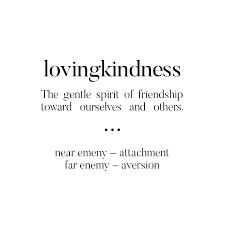
Christopher S. Mulvaney’s Mantra:
May I be filled with loving kindness for all life. May I be safe from dangers within and without. May I be healthy in body, mind, socially, and spiritually. May I be at ease and happy, doing good in the world.
May You be filled with loving kindness for all life. May You be safe from dangers within and without. May You be healthy in body, mind, socially, and spiritually. May You be at ease and happy, doing good in the world.
I am an experienced solo estate planning, debtor bankruptcy, and real estate attorney. At my law firm in Bellevue, Washington between Eastgate and Factoria, I do things a little differently. I am passionate about helping people take control of their lives.
One of my primary practice areas is urgent (bankruptcy), and the other is important, but not urgent (estate planning). Not letting the urgent crowd out the important is key. I have made a choice to include the positive difference I make in the life of each client in how I calculate profit. This means I have higher job satisfaction, and happy clients who confidently give referrals.
My goal is that my work is transformative for people during a challenging time in their lives. At Mulvaney Law Offices, PLLC (MLO), you will not find a gatekeeper. There are no forgotten cases hiding on an associate’s cluttered desk. It’s just me, working with each one of my clients one-on-one to resolve their legal concerns as favorably as possible.
As your lawyer, I will personally handle every aspect of your case. My office is not a factory churning out thousands of filings per year, where each case matters little. You, and your case, matter to me. You can see what clients have said about me, and leave your own reviews at these links.
Mulvaney Law Offices, PLLC is located in Bellevue, Washington, representing estate planning & chapter 7 and chapter 13 bankruptcy, clients in all 39 Washington Counties.
Washington State residents can meet with me in Zoom/DocuSign from anywhere in the world, and I can notarize their electronic signatures because I am a remote online notary. Just email me an image of your photo ID.