THIS WEBSITE INCLUDES GENERAL INFORMATION & THE OPINIONS OF CHRISTOPHER S. MULVANEY. IT IS INTENDED TO STIMULATE A BASIS FOR QUESTIONS RELATED TO YOUR PARTICULAR FACTUAL CIRCUMSTANCES — BEFORE YOU ACT. THIS WEBSITE DOES NOT CONSTITUTE LEGAL ADVICE. IF YOU WANT LEGAL ADVICE, PLEASE MAKE A ZOOM APPOINTMENT TO SPEAK WITH ME.
CONTACT CHRISTOPHER S. MULVANEY FORM
DISCLAIMER:
The use of email or this form for communication with MULVANEY LAW OFFICE, PLLC does not establish an Attorney-Client Relationship. If you don’t think I have responded, please check your spam folder. Time-sensitive information should not be sent through this Form or through email. Sensitive information can be uploaded to an encrypted Dropbox folder in your client file. Google Review LinkYelp Review Link
Gonzaga University School of Law – Spokane, Washington – Class of 2002 – Cum Laude The Latin phrase “Deo patriae, scientiis, artibus” translates to “For God and country through sciences and arts”. The initials A.M.D.G. on the seal of Gonzaga Law School stand for Ad Majorem Dei Gloriam, which is Latin for “For the Greater Glory of God” the Motto of the Society of Jesus (Jesuits): a Catholic religious order founded by St. Ignatius of Loyola.
_________________________
Assignment means that non-titled property (property that doesn’t have your name and social security number associated with it) is in your Revocable Living Trust as soon as you sign it so that the Successor Trustee can administer the property according to your wishes without an Order from the Probate Court.
When personal property is assigned to a Revocable Living Trust, it means that the legal ownership of those assets is transferred from the individual who created the trust (the grantor) to the trust itself. This is also known as “funding” the trust.
Here’s a breakdown of what this means:
Legal Ownership: The trust, specifically the trustee, becomes the legal owner of the personal property.
Beneficial Ownership: While the trust holds legal title, the grantor typically retains beneficial ownership during their lifetime, meaning they can continue to use and enjoy the property as they normally would.
Trustee’s Role: The trustee manages the property according to the terms of the trust agreement. If the grantor is the trustee, they maintain control. If a successor trustee is named, they will manage the assets if the grantor becomes incapacitated or passes away.
Probate Avoidance: A key benefit of assigning personal property to a trust is that it avoids the probate process upon the grantor’s death. This means the assets can be distributed to beneficiaries more quickly and privately than if they were part of a probate estate.
Privacy: Unlike a will, which becomes a public record during probate, the details of a trust and its assets remain private.
Incapacity Planning: If the grantor becomes unable to manage their own affairs, the successor trustee can step in and manage the assets within the trust, ensuring they are protected and used for the grantor’s benefit.
Asset Protection: While a revocable living trust offers some level of asset protection, it’s generally less robust than an irrevocable trust. Assets in a revocable trust may still be accessible to creditors because the grantor retains control.
Methods of Transfer:
Assignment of Personal Property: For many types of personal property that don’t have formal titles (like jewelry, furniture, and collectibles), an Assignment of Personal Property document can be used to legally transfer ownership to the trust.
Title Transfer: For items with titles, such as vehicles, boats, and RVs, the title must be formally transferred to the trust’s name through the appropriate state agency (e.g., the Department of Motor Vehicles).
Updating Account Ownership: For assets like bank accounts and investment accounts, the account ownership needs to be changed to reflect the trust as the legal owner.
Important Considerations:
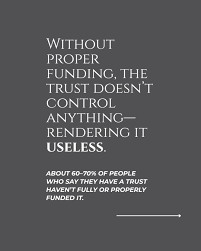
Proper Funding: Creating the trust document is only the first step. To gain the full benefits of a living trust, the assets must be legally transferred into it.
Specific Instructions: The trust document should clearly define what personal property is being assigned and how it should be managed and distributed to beneficiaries.
Consulting with Christopher S. Mulvaney: It’s crucial to consult with an estate planning attorney such as Christopher S. Mulvaney to ensure that all personal property is properly assigned to the trust and that the trust is structured to meet your specific needs and goals.
By assigning personal property to a revocable living trust, you’re taking a significant step in your estate planning to help ensure your assets are managed according to your wishes, avoid probate, and provide for your beneficiaries.
Transferring personal property to a trust, often through an Assignment of Personal Property document (included within the MULVANEY LAW OFFICES, PLLC Trust Document), is a crucial step in estate planning.
Here’s why it’s important and some related points:
Avoids probate: Assets held in a trust typically bypass the probate process, saving your beneficiaries time and legal fees.
Ensures clarity in distribution: A well-crafted Assignment of Personal Property prevents confusion and potential disputes among beneficiaries regarding the distribution of assets like furniture, jewelry, art, and collectibles.
Privacy Protection: Unlike a will, which becomes public record, a trust generally keeps details about your assets and beneficiaries confidential.
Control over assets and their distribution: Trusts provide a framework for managing and distributing assets according to your specific wishes, including provisions for beneficiaries who may need assistance managing inherited funds.
Flexibility: A revocable trust allows you to modify the terms and assets within the trust as needed, such as adding or removing beneficiaries or transferring new property.
Points to consider when transferring personal property to a trust:
Create an Assignment of Personal Property document: This legal form clearly outlines the specific items being transferred to the trust. This is done with the Letter of Instruction Tangible Personal Property Memorandum kept with the signed MULVANEY LAW OFFICES, PLLC Trust document
Describe the property in detail: Ensure clear descriptions of the items to facilitate identification by the successor trustee. Digital pictures are especially helpful for jewelry, art, antiques, and collectibles.
Consult with an estate planning attorney like Christopher S. Mulvaney: He can help you determine the best approach for your specific situation and ensure proper documentation is in place.
For accounts (like bank accounts or investment accounts): Notify the financial institution and work with them to change ownership.
For titled property (like vehicles): A separate Department of Licensing Affidavit of Inheritance is necessary to be completed by the Estate Administrator.
In essence, assigning personal property to a trust, particularly through a carefully drafted assignment document (included within the MULVANEY LAW OFFICES, PLLC Trust Document), helps ensure a smoother and more private distribution of your assets, alleviating potential complexities and conflicts for your loved ones after your passing.
“A good plan is like a road map: it shows the final destination and usually the best way to get there.” — H. Stanley Judd.
“By failing to plan, you are preparing to fail.” — Benjamin Franklin.
“Always plan ahead. It wasn’t raining when Noah built the ark.” — Richard Cushing.
“Only put off until tomorrow what you are willing to die having left undone.” — Pablo Picasso.
“If you do not have a Will or plan for your estate, then the government has one for you.” Shez Christopher.
“Sometimes, the poorest man leaves his children the richest inheritance.” — Ruth E. Renkel.
“There’s nothing fun about stuff like estate planning, getting mammograms, or talking to a guy about long-term disability insurance, but you do it anyway. Trust me, the stress of not having done the above is prematurely aging.” — Jen Lancaster.
“Do something today that your future self will thank you for.” — Sean Patrick Flanery.
“We make a living by what we get, but we make a life by what we give.” — Winston Churchill.
“The more informed we are, the more we understand and the better we’re able to protect ourselves, our family, and assets.” — Spencer Sean.
“Estate planning has so many tax angles that if people are not properly set up with an estate plan, then they can create real problems for their family.” — Mark C. Milton.
“Let our advance worrying become advance thinking and planning.” — Winston Churchill.
To Always Be a Human Being First, and My Role Second. To First, Do No Harm, then to provide the best legal outcome, smoothest process, best value, and to make a positive difference in the life of every client.
Christopher S. Mulvaney’s Mantra:
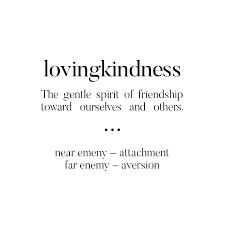
May I be filled with loving kindness for all life. May I be safe from dangers within and without. May I be healthy in body, mind, socially, and spiritually. May I be at ease and happy, doing good in the world.
May You be filled with loving kindness for all life. May You be safe from dangers within and without. May You be healthy in body, mind, socially, and spiritually. May You be at ease and happy, doing good in the world.
I am an experienced solo estate planning, debtor bankruptcy, and real estate attorney. At my law firm in Bellevue, Washington between Eastgate and Factoria, I do things a little differently. I am passionate about helping people take control of their lives.
One of my primary practice areas is urgent (bankruptcy), and the other is important, but not urgent (estate planning). Not letting the urgent crowd out the important is key. I have made a choice to include the positive difference I make in the life of each client in how I calculate profit. This means I have higher job satisfaction, and happy clients who confidently give referrals.
My goal is that my work is transformative for people during a challenging time in their lives. At Mulvaney Law Offices, PLLC (MLO), you will not find a gatekeeper. There are no forgotten cases hiding on an associate’s cluttered desk. It’s just me, working with each one of my clients one-on-one to resolve their legal concerns as favorably as possible.
As your lawyer, I will personally handle every aspect of your case. My office is not a factory churning out thousands of filings per year, where each case matters little. You, and your case, matter to me. You can see what clients have said about me, and leave your own reviews at these links.
Mulvaney Law Offices, PLLC is located in Bellevue, Washington, representing estate planning & chapter 7 and chapter 13 bankruptcy, clients in all 39 Washington Counties.
Washington State residents can meet with me in Zoom/DocuSign from anywhere in the world, and I can notarize their electronic signatures because I am a remote online notary. Just email me an image of your photo ID.